
Tag: Winter

  • Snowmobile Insurance in Quebec: Legal Requirements and Coverage Options

    Snowmobile Insurance in Quebec: Legal Requirements and Coverage Options

    Quick answer: Yes, snowmobile insurance is mandatory in Quebec. Every owner of an off-highway vehicle, including snowmobiles, ATVs and side-by-sides, must hold private civil liability insurance of at least $1,000,000, and riders must carry proof of it. That minimum only covers damage or injuries you cause to others; coverage for your own machine and your own injuries is optional, and the SAAQ public plan generally does not compensate injuries from an off-road accident unless a moving road vehicle covered by the plan is involved. A trail permit from the FCMQ or FQCQ is a separate requirement, not a replacement for insurance.

    From the trails around Mont-Laurier and Nominingue to the corridors linking Saint-Donat, Mont-Tremblant and the Hautes-Laurentides, the region is one of Quebec’s busiest playgrounds for snowmobilers in winter and ATV and side-by-side riders the rest of the year. Many residents own a sled for the chalet, and many visitors trailer their machines up the 117 every weekend. Yet a surprising number of riders are not sure exactly what the law requires, what their policy actually covers, or why their home insurance will not help after a crash.

    This guide explains Quebec’s legal insurance requirement for off-highway vehicles (OHVs), the optional coverages worth knowing about, how the SAAQ’s public plan does and does not apply, and how trail permits fit into the picture.

    Key takeaways

    • Owners of snowmobiles, ATVs and side-by-sides in Quebec must carry at least $1,000,000 in civil liability insurance (Regulation respecting off-highway vehicles, s. 11.03).
    • You must carry proof of insurance when riding; police and trail patrollers can ask for it.
    • The SAAQ public plan generally does not compensate bodily injury from an off-road vehicle accident unless a moving vehicle covered by the plan is involved.
    • Collision, theft, fire and accident benefits coverage for your own machine and injuries are optional but often important.
    • A trail permit (FCMQ for snowmobiles, FQCQ for ATVs and side-by-sides) is required on club trails but is not a substitute for your own liability policy.
    • Home insurance usually excludes motorized vehicles like snowmobiles and ATVs, except possibly limited cases on your own property.

    Advertisement

    Is snowmobile insurance mandatory in Quebec?

    Yes. Quebec’s Act respecting off-highway vehicles requires owners to be insured, and the Regulation respecting off-highway vehicles (chapter V-1.2, r. 5) sets the minimum amount of civil liability insurance at $1,000,000. The SAAQ confirms that snowmobilers must hold private civil liability insurance of at least $1,000,000 and must carry proof of it at all times.

    Note that some older publications still mention a lower minimum of $500,000. That amount was raised; the current regulation sets the minimum at $1,000,000. If you have an older policy that has simply been renewed for years, it is worth confirming the liability limit on your declarations page.

    For an overview of all the insurance products required by law in the province, see our guide on mandatory insurance in Quebec.

    Does the same rule apply to ATVs and side-by-sides?

    Yes. The insurance requirement applies to off-highway vehicles in general, which includes snowmobiles, all-terrain vehicles (quads) and side-by-sides (often called SxS or recreational off-highway vehicles), as well as trail bikes. The SAAQ’s page on situations not covered by the public plan lists these vehicle types together and repeats the $1,000,000 private liability requirement.

    What does the mandatory $1,000,000 liability cover?

    Civil liability insurance protects you when you are legally responsible for damage to someone else. Examples:

    • You hit another snowmobiler on a trail and injure them.
    • Your ATV damages a landowner’s fence, crops or equipment.
    • Your passenger, or a person you are towing, is injured and claims you were at fault.
    • Someone borrows your machine and causes an accident (coverage depends on your policy terms for authorized operators).

    It does not pay to repair or replace your own snowmobile or ATV, and it does not compensate your own injuries. That is where optional coverages come in.

    Does the SAAQ cover snowmobile accidents?

    This is one of the most misunderstood points. Quebec’s public automobile insurance plan, administered by the SAAQ, compensates bodily injury from road accidents involving automobiles. However, the SAAQ’s page on what is not covered states that no compensation is paid for bodily injury or death resulting from an accident involving a snowmobile or other off-road vehicle, unless the accident involves a moving vehicle covered by the plan.

    The SAAQ also notes that the registration fee for an off-road vehicle includes no insurance contribution. In other words, paying for your plate does not give you public injury coverage on the trails.

    Practical consequence: if you crash alone on a trail, collide with another snowmobile, or hit a tree, your own injuries are generally not compensated by the SAAQ. Your options are your personal health and disability insurance, accident benefits coverage on your OHV policy (if you bought it), or a liability claim against someone else who was at fault.

    What optional coverage is available for snowmobiles and ATVs?

    The structure of an OHV policy in Quebec is similar to auto insurance. The Fédération québécoise des clubs quads (FQCQ) describes optional coverage for property damage (collision or upset, non-collision events such as fire, theft, vandalism and broken glass, or specified perils) and for bodily injury to yourself.

    Coverage What it protects Mandatory?
    Civil liability Injuries and property damage you cause to others Yes, minimum $1,000,000
    Collision or upset Damage to your machine from a collision or rollover No
    Comprehensive / non-collision Fire, theft, vandalism, falling objects, glass No
    All perils Collision plus comprehensive combined No
    Accident benefits / bodily injury Your own injuries (and sometimes passengers) No
    Trailer coverage Damage to the trailer used to transport the machine No (check auto and OHV policies)
    Accessories and gear Covers, GPS, added equipment, sometimes clothing No, often limited
    Replacement cost / new value Pays to replace a recent machine without depreciation No, usually for newer units

    Do I need theft coverage in the Laurentides?

    Snowmobiles and ATVs are often stored at chalets, in unheated garages or on trailers in parking lots at trailheads and motels. Theft and vandalism coverage is optional, but owners of newer or high-value machines usually consider it essential. Insurers may ask about storage location, locks, anti-theft devices or GPS trackers, especially for expensive side-by-sides.

    Is seasonal coverage possible?

    Some insurers offer policies where collision coverage is suspended during the off-season while theft and fire remain in force. Remember that the liability requirement applies whenever the machine is used. Ask your broker how seasonal options work and what happens if you ride outside the declared season.

    Advertisement

    Does home insurance cover my snowmobile or ATV?

    In most cases, no. Home insurance policies typically exclude motorized vehicles, including their use away from your property, both for damage to the machine and for liability arising from its use. Some policies provide limited coverage for small motorized equipment used on your own property (for example, a lawn tractor), and some may offer limited liability in narrow situations, but riding on trails is a different matter entirely. If you’re unsure where your home policy stops, see our guide on home insurance exclusions in Quebec.

    Likewise, your car insurance does not cover your snowmobile, although some insurers let you bundle vehicles and recreational toys with one company. Our auto insurance guide for the Laurentides and the tips in how to lower car insurance in Quebec discuss multi-policy considerations.

    What other legal requirements apply to snowmobilers in Quebec?

    Insurance is only one part of the rules. According to the SAAQ, snowmobilers must also respect the following:

    • Minimum age: 16 years old. Riders aged 16 or 17 need a training certificate.
    • Driver’s licence: a valid licence is required to ride on a public road (where allowed), on trails covered by the Act, or elsewhere outside areas governed by the Highway Safety Code.
    • Registration: the snowmobile must be registered with the SAAQ, even if it is only used on trails, with the plate affixed.
    • Helmet: mandatory for the driver and passengers, including anyone towed in a sled.
    • Speed: 70 km/h maximum unless a lower limit is posted, and 30 km/h within 30 metres of a residence.
    • Documents to carry: proof of civil liability insurance, registration certificate, proof of age, driver’s licence, training certificate if applicable, and trail permit if applicable.

    Is the FCMQ trail permit the same as insurance?

    No. To ride on trails maintained by snowmobile clubs, you need a valid trail permit (often called a trail pass or droit d’accès), sold through the Fédération des clubs de motoneigistes du Québec (FCMQ) and its member clubs. For ATVs and side-by-sides, trail access is managed by clubs affiliated with the FQCQ.

    The permit pays for trail maintenance, grooming, signage and the agreements clubs make with landowners. Federations may include certain group insurance protections tied to membership or club activities, but these are not a replacement for the personal civil liability insurance the law requires you to hold as an owner. Always read what the federation actually includes and keep your own policy in force.

    Think of it this way: the SAAQ registration lets your machine exist legally, your insurance policy protects others (and optionally you), and your trail permit gives you access to the club network. You usually need all three.

    Laurentides-specific considerations

    Several local realities can influence how you insure an off-highway vehicle in the region:

    • Chalet storage: machines stored at a secondary residence may be rated differently than those kept at your principal home. Tell your insurer where the machine is stored. Our chalet and cottage insurance guide covers related issues for secondary properties.
    • Rental guests: if you rent your chalet and let guests use your snowmobile, ATV or side-by-side, that is a major change in risk. Many policies exclude rental or use by paying guests. See our guide on short-term rental chalet insurance and disclose it to your insurer before it happens.
    • Frozen lakes: crossing lakes is common in the Hautes-Laurentides. Breaking through ice can destroy a machine; whether it is covered depends on your physical damage coverage and policy conditions.
    • Visitors from outside Quebec: riders from Ontario or elsewhere must still meet Quebec’s requirements while riding here, including the liability minimum. Check with your home-province insurer that your policy meets Quebec’s $1,000,000 requirement.
    • Trailering: towing your sled or quad on the highway involves your auto policy and possibly separate trailer coverage.

    How to choose the right snowmobile or ATV policy

    1. Confirm the liability limit is at least $1,000,000; many riders choose more for extra protection.
    2. Decide on physical damage coverage based on your machine’s value and whether you could absorb a total loss.
    3. Look at accident benefits carefully, given the SAAQ’s limited role in off-road accidents.
    4. Ask about authorized drivers, especially young riders and guests.
    5. Check accessories, trailer and gear coverage limits.
    6. Compare through more than one channel. Our article on brokers vs agents vs direct insurers explains how each works.

    Planning a winter trip? Find regional information on thelaurentides.com.

    Advertisement

    Frequently asked questions

    What is the minimum snowmobile insurance in Quebec?

    The minimum is $1,000,000 in civil liability insurance, set by section 11.03 of the Regulation respecting off-highway vehicles. It covers injuries and damage you cause to others. Coverage for your own machine and your own injuries is optional.

    Do I need insurance for an ATV used only on my own land?

    The insurance obligation applies to owners of off-highway vehicles, and the SAAQ also requires registration even for machines used only on trails. Using a quad only on private land does not eliminate liability risk, for example if a visitor is injured. Confirm with your insurer and the SAAQ how the rules apply to your exact situation.

    Am I covered by the SAAQ if I’m injured on my snowmobile?

    Generally no. The SAAQ does not compensate injuries from an accident involving an off-road vehicle unless a moving vehicle covered by the public plan is involved, such as a car on a road. Accident benefits on your private policy or personal disability insurance are the usual alternatives.

    Does my FCMQ trail permit include insurance?

    The trail permit gives you access to club-maintained trails. It does not replace the personal $1,000,000 liability insurance owners must hold. Check with the FCMQ or your club for details about any group protection associated with the permit.

    Can I lend my snowmobile to a friend?

    Many policies cover authorized operators who meet the legal requirements, but terms vary. If your friend causes an accident, a claim may be made on your policy. Confirm the authorized operator rules with your insurer, especially for young or inexperienced riders.

    What happens if I ride without insurance?

    Riding without the required insurance is an offence under Quebec’s off-highway vehicle rules and can lead to a fine. More importantly, you could be personally responsible for the full cost of injuries or damage you cause, which can be financially devastating.

    Have a question we didn’t answer? Contact us.

    This article is for general information only and is not insurance advice. Laurentides Insurance Guide does not sell insurance. Always confirm with a licensed broker or your insurer.
  • Wood Stoves, Fireplaces and Home Insurance in Quebec

    Wood Stoves, Fireplaces and Home Insurance in Quebec

    Yes, you can insure a home with a wood stove or fireplace in Quebec, but you must declare it to your insurer, and most insurers will want to know what type of appliance you have, whether it is certified, who installed it and how it is maintained. A certified appliance installed by a qualified professional, with proper clearances and regular chimney sweeping, is the combination insurers generally look for. Failing to declare wood heating can reduce or even void your coverage after a fire, so getting this right matters.

    Key takeaways

    • Always declare wood heating, including fireplaces, stoves, inserts, pellet stoves, outdoor furnaces and wood-burning appliances in garages, cabins or saunas.
    • Certification matters. Since 2009, Quebec’s regulation on wood-burning appliances has required new appliances sold in the province to meet CSA B415.1 or the US EPA emission standard. Insurers often ask whether yours is certified.
    • Professional installation and documentation help with underwriting and claims. Keep the installer’s invoice and the appliance manual.
    • Clearances to combustibles must follow the manufacturer’s instructions and applicable installation codes.
    • Chimney sweeping at least once a year, or more often depending on use, is widely recommended. Keep the receipts.
    • Not declaring can have serious consequences under the Civil Code of Québec, from a reduced indemnity to cancellation of the policy.

    Advertisement

    Wood heating in the Laurentides

    From Saint-Sauveur to Mont-Laurier, wood stoves and fireplaces are part of the character of many Laurentides homes and chalets. They provide comfort, backup heat during power outages and, for some households, a primary heat source. They are also a fire risk if they are poorly installed, overheated or not maintained. Creosote build-up in a chimney, hot embers falling on a wooden floor, or a stove placed too close to a wall are classic causes of house fires.

    Insurers do not usually refuse homes simply because they have wood heating. Instead, they assess the risk based on the appliance, the installation and your maintenance habits, and they price or condition the policy accordingly.

    Types of solid-fuel appliances insurers ask about

    Appliance Description What insurers typically want to know
    Freestanding wood stove Stand-alone stove connected to a chimney by a flue pipe Certification, installer, clearances, floor protection, chimney type
    Fireplace insert Closed unit installed inside an existing masonry fireplace Certification, chimney liner, installer
    Open masonry fireplace Traditional open fireplace Condition of masonry and chimney, frequency of use, sweeping
    Factory-built (prefabricated) fireplace Manufactured fireplace with its own chimney system Listing, installation per manufacturer, condition
    Pellet stove Burns compressed wood pellets with automatic feed Certification, installation, venting
    Wood or dual-fuel central furnace Central heating system burning wood, sometimes combined with oil or electricity Certification, installer, ducting, maintenance
    Outdoor wood boiler Separate unit outside the house heating water Distance from buildings, installation, local bylaws
    Wood stove in an outbuilding, sauna or garage Secondary appliance outside the main home Must be declared; may affect outbuilding coverage

    Declaring wood heating to your insurer

    Under the Civil Code of Québec, when you apply for insurance you must disclose the facts you know that are likely to materially influence the insurer’s decision to accept the risk or set the premium. Wood heating clearly falls in that category, and most application forms ask about it directly.

    During the policy, the law also requires you to promptly notify your insurer of changes within your control that materially increase the risk. Installing a wood stove in a home that did not have one, converting a decorative fireplace into a regular heat source, or adding a stove in your garage are typical examples. Notify the insurer before you start using the new appliance.

    What insurers commonly ask

    • What type of appliance is it (stove, insert, fireplace, pellet stove, furnace)?
    • Is it certified to CSA B415.1 or the US EPA standard? What is the make, model and year?
    • Who installed it, and when? Do you have an invoice?
    • Is it a primary or secondary heat source? How often is it used?
    • What type of chimney does it use (masonry, factory-built metal)?
    • When was the chimney last swept and inspected?
    • Are clearances to combustible materials respected? Is there proper floor protection?
    • Are smoke alarms and carbon monoxide detectors installed?
    • Where and how is firewood stored, and how are ashes disposed of?

    Key tip: Take a clear photo of the appliance’s certification label (usually on the back or side of the unit) and keep it with your insurance documents. It answers the most common underwriting question in seconds.

    Certified appliances: CSA B415.1 and EPA

    Quebec adopted the Regulation respecting wood-burning appliances under the Environment Quality Act. Since September 1, 2009, it has prohibited the manufacture, sale and distribution in Quebec of wood-burning appliances that do not meet the emission standards of CSA B415.1 or the US Environmental Protection Agency (EPA). Certified appliances burn more cleanly and efficiently, which generally means less smoke and less creosote, a major contributor to chimney fires.

    This provincial rule is about emissions for new appliances sold in Quebec. It does not automatically require you to remove an older stove already installed in your home. However:

    • Some insurers prefer or require certified appliances and may add a surcharge, conditions or refuse coverage for older uncertified units.
    • Some municipalities have their own bylaws restricting or banning certain wood-burning appliances, or requiring certified units. Check with your municipality.
    • Replacing an older stove with a certified model is a good time to update your insurer, which may improve your terms.

    The Quebec government publishes information about wood heating and air quality on Québec.ca.

    Installation by qualified installers

    Many fires linked to wood heating are caused by installation errors: insufficient clearances, improper flue pipe connections, a chimney that is not suitable for the appliance, or missing floor protection. Insurers therefore pay close attention to who installed the stove.

    In Canada, the installation of solid-fuel-burning appliances is guided by the CSA B365 installation code, together with the manufacturer’s instructions and applicable building codes. In Quebec, the Association des professionnels du chauffage (APC) offers training and certification programs for wood-heating installers and chimney sweeps. Elsewhere in Canada, you may hear about WETT (Wood Energy Technology Transfer) certified inspectors; WETT is widely used in other provinces, while in Quebec many insurers and homeowners refer to APC-trained or certified professionals. Ask your insurer which qualifications it accepts.

    Good practices for installation

    1. Choose a certified appliance suited to the size of the space.
    2. Hire a qualified installer and ask about their training or certification.
    3. Check whether your municipality requires a permit for the installation.
    4. Follow the manufacturer’s installation manual exactly, especially for clearances and chimney requirements.
    5. Get a detailed invoice listing the appliance, chimney components, clearances and date.
    6. Notify your insurer before first use and send the documents if requested.

    Advertisement

    Clearances and floor protection

    Clearance is the minimum distance between the appliance (and its flue pipe) and combustible materials such as wood walls, furniture, trim and drapes. The required distances depend on the appliance and are specified in its certification label and manual. Heat shields and approved wall protection can sometimes reduce clearances, but only as permitted by the manufacturer and the installation code.

    Floor protection is equally important. Freestanding stoves usually require a non-combustible floor pad extending a minimum distance in front of the loading door and on the sides, to catch embers when the door is opened. Again, the manual specifies the dimensions.

    • Never store firewood, kindling, newspapers or furniture inside the clearance zone.
    • Do not install a stove in a location the manual prohibits, such as some alcoves or bedrooms, unless explicitly allowed.
    • Re-check clearances after renovations, such as new wall panelling or flooring.

    Chimney sweeping and inspection

    Creosote is a tar-like residue that builds up inside chimneys, especially when wood is wet or fires are smouldering. It is highly flammable and is a leading cause of chimney fires. Regular sweeping removes it and gives the sweep a chance to spot cracks, deteriorated liners or loose components.

    • Frequency: Annual sweeping is widely recommended, and more frequent sweeping may be needed if you heat mainly with wood or burn wet wood. Some municipalities also have sweeping requirements. Follow the manufacturer’s recommendations and your sweep’s advice.
    • Who: Use a qualified chimney sweep. Ask about their training and insurance.
    • Proof: Keep dated receipts. If you sweep yourself, keep notes and photos, but be aware that some insurers may prefer professional service.
    • After a chimney fire: Stop using the appliance and have the chimney inspected before using it again, even if the fire seemed minor.

    Inspections insurers may request

    When you buy a property with wood heating, add a stove, or switch insurers, some insurers ask for an inspection report from a qualified professional confirming that the appliance and chimney are properly installed and in good condition. A general pre-purchase home inspection often notes the presence and visible condition of a stove but may not include a full assessment of the chimney’s interior. If you are buying, see our home insurance checklist for buying a property in the Laurentides for how to handle this before removing your conditions.

    Safe operation habits insurers like to see

    • Burn only dry, seasoned firewood. Never burn treated wood, painted wood, garbage or plastics.
    • Do not overfire the appliance; follow the manual for air controls and loading.
    • Store firewood away from the house, and only bring in what you need.
    • Dispose of ashes in a metal container with a tight lid, placed outside away from the house, decks and combustible materials. Ashes can stay hot for days.
    • Install smoke alarms on every level and carbon monoxide detectors near sleeping areas and fuel-burning appliances. Test them regularly.
    • Keep a fire extinguisher accessible and know how to use it.
    • Never leave a fire unattended for long periods, especially at a chalet before leaving.

    Wood heating at chalets and rentals

    Chalets are where wood stoves are most common and where risks can be higher: guests unfamiliar with the appliance, long periods without occupancy, and remote locations far from fire services. If you rent your chalet, your insurer needs to know both about the wood stove and about the rental activity. Many owners provide clear written instructions to guests, a metal ash bucket, and an extinguisher, and some decide not to allow guests to use the stove at all. Our guides to chalet and cottage insurance in the Laurentides and short-term rental chalet insurance in Quebec explain the additional requirements. Travellers looking for a chalet with a fireplace can explore chalets.thelaurentides.com.

    Consequences of not declaring a wood stove

    The Civil Code of Québec sets out what happens when an insured fails to disclose a relevant fact or misrepresents it:

    • Proportional reduction: In the absence of fraud, if the insurer would have accepted the risk at a higher premium, the indemnity can be reduced in proportion to the premium you paid versus the premium you should have paid.
    • Cancellation or nullity: If the insurer would not have accepted the risk at all had it known, or in the case of fraud, the policy can be annulled, and a claim may be refused entirely.
    • Aggravation of risk: Failing to report a new appliance installed during the policy term can lead to similar consequences.

    In practical terms, an undeclared wood stove can turn a fire claim into a dispute at the worst possible time. Fire investigators routinely determine the cause and origin of a fire, so an undeclared appliance is likely to come to light.

    Key tip: If you realize your insurer does not know about your wood stove, contact your broker or insurer now. Correcting the file before a loss is far better than explaining it after one.

    How wood heating can affect your premium and terms

    Each insurer has its own approach, and we do not publish numbers because premiums vary widely. Factors that commonly influence how an insurer treats wood heating include:

    • Whether the appliance is certified and how old it is.
    • Whether it is the primary or a secondary heat source.
    • Professional installation and available documentation.
    • Chimney type and condition, and sweeping records.
    • Distance to a fire hydrant and fire station.
    • Claims history and other features of the home.

    If one insurer imposes strict conditions, another may view the same setup differently. A broker can compare insurers’ approaches; see our guide on broker vs agent vs direct insurer in Quebec. For general advice on comparing policies, read how to shop for home insurance in the Laurentides.

    If a fire happens

    1. Get everyone out and call 911. Do not try to fight a chimney or house fire beyond the very first moments.
    2. Once safe, notify your insurer as soon as possible.
    3. Do not use the appliance again until it has been inspected.
    4. Document damage with photos and keep receipts for emergency expenses.

    Our guide on how to file a home insurance claim in Quebec walks through the process step by step.

    Advertisement

    Frequently asked questions

    Do I have to tell my insurer about a fireplace I never use?

    Yes, declare it and explain that it is not used. The insurer may ask whether it is sealed or decommissioned. If you later start using it, notify the insurer before you do.

    Is my old wood stove illegal in Quebec?

    The provincial regulation applies to the manufacture, sale and distribution of new appliances. It does not, by itself, require you to remove an existing older stove. However, your municipality may have its own rules, and your insurer may impose conditions on uncertified appliances.

    What is the difference between WETT and APC?

    WETT is a wood energy training and certification program widely used in other Canadian provinces. In Quebec, the Association des professionnels du chauffage (APC) offers training and certification for wood-heating installers and chimney sweeps. Ask your insurer which credentials it accepts for inspections.

    How often should my chimney be swept?

    At least once a year is a common recommendation, and more often if you heat mainly with wood. Follow the manufacturer’s guidance, your sweep’s advice and any municipal requirements, and keep dated receipts.

    Can installing a wood stove increase my premium?

    It can, depending on the insurer and the setup. A certified appliance, professional installation and good maintenance records generally put you in the best position.

    Are pellet stoves treated the same as wood stoves?

    Pellet stoves are also solid-fuel appliances and must be declared. Insurers may assess them differently from traditional wood stoves, so ask your insurer how it classifies yours.

    Want a second opinion on your coverage? Contact us and we will point you in the right direction.

    This article is for general information only and is not insurance advice. Always confirm details with a licensed broker or your insurer.

  • Roof, Snow Load and Winter Damage: Insurance Tips for Laurentides Homes

    Roof, Snow Load and Winter Damage: Insurance Tips for Laurentides Homes

    In the Laurentides, your roof is one of the first things a home insurer looks at, and winter is when it gets tested hardest. Most home policies in Quebec cover sudden, accidental roof damage, such as a collapse under the weight of snow or a leak caused by a storm, but they generally exclude damage that comes from wear and tear, poor maintenance or slow deterioration. This guide explains how roof age and material affect your insurability, how ice dams and snow load claims are usually handled, and what you can do now to protect both your house and your coverage.

    Key takeaways

    • Roof age and material matter to insurers. An older or poorly maintained roof can mean higher premiums, a higher deductible, depreciated payouts on roof claims, or difficulty finding coverage at all.
    • Sudden vs gradual is the line that decides most claims. A roof that collapses under heavy snow is treated very differently from a roof that leaked slowly for years.
    • Ice dam water damage is a grey zone. Coverage depends on your policy wording, especially for water entering through the roof. Read the water damage section and ask your broker or insurer to explain it in writing if needed.
    • Documentation is your best defence. Keep invoices, photos and dates for roof replacement, repairs, inspections and snow removal.
    • Known changes must be declared. Under the Quebec Civil Code, you must answer your insurer’s questions truthfully and notify it of changes that increase the risk.
    • Call a roofer early, not after the collapse. Signs like sagging ceilings, sticking interior doors, new cracks in walls or unusual creaking are warnings, not quirks.

    Advertisement

    Why roofs matter so much to insurers in the Laurentides

    The Laurentides combine heavy snowfall, frequent freeze-thaw cycles, long winters and a large stock of older houses and chalets. From Saint-Jérôme and Mirabel to Sainte-Adèle, Val-David, Mont-Tremblant and Mont-Laurier, many homes sit on wooded lots where branches, shade and slow melting all add stress to the roof. Insurers know that a roof failure can trigger a chain of losses: water in the attic, damaged insulation, wet drywall, mould, ruined contents and sometimes a family that has to move out during repairs.

    That is why most home insurance applications in Quebec include questions about the roof: its age, the type of covering, the date of the last replacement, and sometimes whether it has been inspected recently. If you are comparing quotes, our guide on how to shop for home insurance in the Laurentides explains how to prepare these answers in advance so each insurer is quoting on the same information.

    How roof age and material affect insurability

    Insurers do not all use the same rules, and none of them publish a universal age limit, so you should not assume a fixed cut-off. What is consistent is the logic: the older a roof is relative to its expected life, the more likely it is to leak, and the more expensive a claim tends to be.

    Roof age

    When you apply, expect to be asked the year the roof covering was last replaced. Depending on the insurer and the age you declare, possible outcomes include:

    • A standard quote with no special conditions.
    • A request for photos, an inspection report or proof of replacement (invoice from the roofer).
    • A higher deductible that applies specifically to roof or water damage.
    • Settlement of roof claims on an actual cash value basis (with depreciation) rather than full replacement cost.
    • A condition that the roof be replaced within a set period, or a refusal to offer coverage.

    If you do not know the age of your roof, say so rather than guessing. A guess that turns out to be wrong can become a problem at claim time. Your home inspection report, the seller’s declaration, or old invoices are good places to find the answer.

    Roof material

    Common roof coverings in the region include asphalt shingles, steel or metal roofing, and multi-layer or membrane systems (such as elastomeric membranes) on flat or low-slope roofs. Cedar shingles still appear on some older houses and chalets. Each material ages differently and reacts differently to snow, ice and wind. Insurers generally consider the type of covering together with its age and condition. What you should do is describe the material accurately on your application and keep proof of what was installed and when.

    Roof factor Why insurers care What you can provide
    Age of covering Older coverings are more likely to leak or fail Roofer’s invoice, permit, seller’s declaration
    Material Different durability and resistance to ice and wind Invoice or product specification
    Slope (pitched vs flat) Flat roofs hold snow and water differently Inspection report, photos
    Condition Missing shingles, curling, blistered membranes signal risk Recent inspection report, dated photos
    Attic ventilation and insulation Linked to ice dams and condensation Inspection notes, upgrade invoices
    Maintenance history Shows the risk is being managed Snow removal receipts, repair invoices

    Ice dams: what they are and how insurers see them

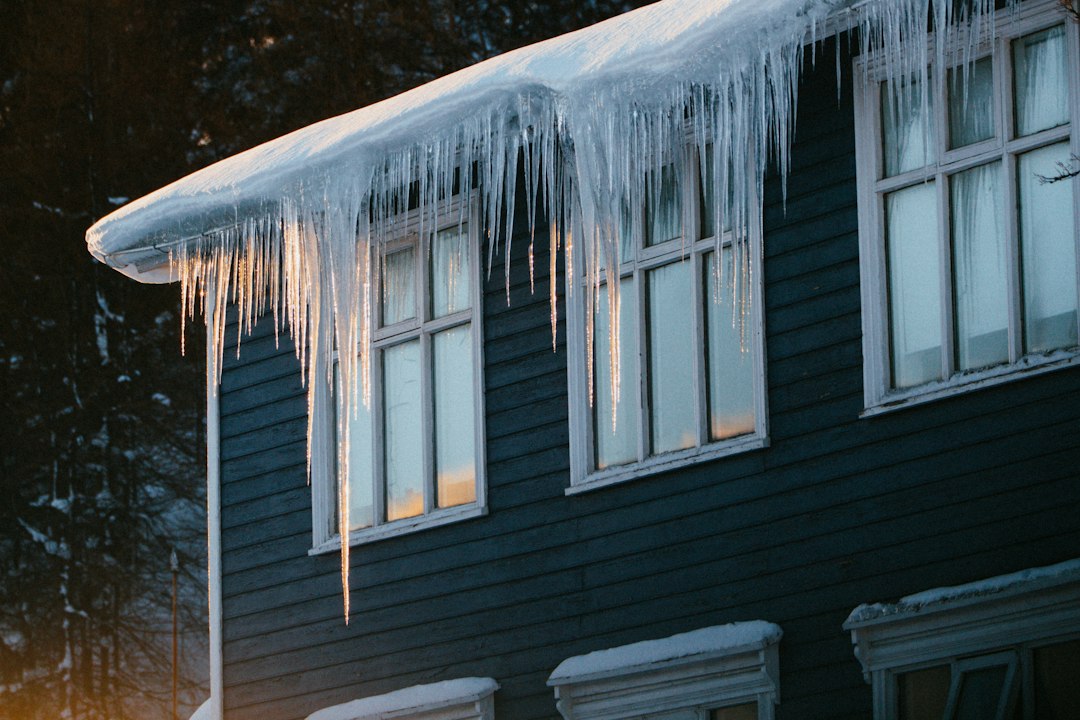
    An ice dam forms when heat escaping from the house warms the roof deck, snow melts higher up, and the water refreezes at the colder eaves. The ridge of ice traps more meltwater behind it, which can back up under shingles and drip into the attic, walls or ceilings. Long icicles along the edge of the roof are often a visible clue.

    The main causes are usually inside the house rather than outside: insufficient attic insulation, air leaks from the living space into the attic, poor ventilation, or heat sources such as recessed lights and uninsulated ducts. That matters for insurance, because an insurer may view repeated ice dams as a maintenance or construction issue rather than a sudden event.

    Is ice dam damage covered?

    There is no single answer for Quebec, because coverage depends on the exact wording of your policy. In general terms:

    • Some policies, particularly broad or “all risks” forms, may cover sudden and accidental water damage from ice dams to the interior of the home, subject to your deductible and exclusions.
    • Many policies distinguish between water that enters through the roof and water that escapes from plumbing, and may treat them differently.
    • Damage to the roof covering itself caused by gradual ice build-up may be treated as wear and tear or lack of maintenance.
    • Repeated, known ice dam problems that were never corrected can weaken your position on a claim.

    Water damage is the single biggest source of confusion for homeowners. Our detailed guide on water damage, sewer backup and flood insurance in the Laurentides explains how these water categories and endorsements usually work.

    Key tip: Ask your broker or insurer a precise question: “If an ice dam causes water to enter through my roof and damage my ceilings, is that covered under my policy, and what deductible applies?” Ask for the answer in writing, by email, so you have it on file.

    Preventing ice dams

    • Have the attic insulation and ventilation evaluated, ideally during a calm season.
    • Seal air leaks between the living space and the attic (light fixtures, attic hatches, plumbing stacks).
    • Keep gutters and downspouts clear before winter.
    • Remove snow from the lower part of the roof safely, using a roof rake from the ground or a professional service.
    • Do not chip ice with axes or hammers; you can damage the covering and void manufacturer warranties.

    Snow load and roof collapse

    Heavy snow is part of life in the Laurentides, but snow becomes dangerous when it accumulates, gets wet, or is topped by rain that soaks in and adds weight. Drifts on the lee side of a roof, snow sliding from a higher roof onto a lower one, and ice build-up can all concentrate load in specific areas. Flat roofs, low-slope additions, carports, garages, sheds and older outbuildings are particularly exposed.

    Warning signs of excessive snow load

    Quebec’s building authority, the Régie du bâtiment du Québec (RBQ), regularly reminds owners to watch for warning signs that a roof is carrying too much snow, including:

    • Cracks appearing in interior walls.
    • Interior doors that stick or rub against their frames.
    • Unusual creaking or cracking sounds.
    • Ceilings that sag or warp.

    If you notice these signs, the RBQ’s advice is to have the roof cleared, even if the amount of snow does not look dramatic, and to use specialized companies with the right equipment so the waterproof membrane is not damaged. The Quebec government also publishes seasonal reminders on Québec.ca about safe snow and ice removal from roofs.

    Is snow load collapse covered?

    Many Quebec home policies cover the collapse of a building caused by the weight of snow, ice or water as a sudden and accidental event, subject to the wording of the policy, your deductible and any exclusions. However, the details matter:

    • Outbuildings: Detached garages, sheds and carports are often covered under a separate section with lower limits. Temporary shelters (such as fabric car shelters) may be limited or excluded.
    • Neglect: If an insurer can show that a structure had obvious defects, rot or prior damage that was ignored, it may argue that the loss stems from deterioration rather than a sudden event.
    • Vacant or seasonal homes: Chalets left unoccupied for long periods may carry conditions about inspections and winter maintenance. See our guide to chalet and cottage insurance in the Laurentides for the typical requirements.
    • Contents and living expenses: Damaged furniture and the cost of living elsewhere during repairs fall under other parts of the policy, each with their own limits.

    Advertisement

    What is generally covered and what is not

    Every policy is different, but the following table summarizes how insurers typically approach winter roof situations. Use it as a starting point for a conversation with your broker, not as a guarantee.

    Situation Often covered? Common conditions or exclusions
    Roof collapses under sudden heavy snow load Often, as sudden and accidental damage Deductible; exclusions for pre-existing defects or neglect
    Wind tears off shingles during a storm Often Older roofs may be settled at depreciated value
    Tree falls on roof during a storm Often Removal costs may have limits; dead trees you ignored may complicate the claim
    Interior water damage from an ice dam Depends on policy wording May require a specific form or endorsement; deductibles may differ
    Roof covering worn out after many years Generally not Wear and tear and lack of maintenance are standard exclusions
    Slow leak that caused rot or mould over months Generally not Gradual damage and repeated seepage are commonly excluded
    Damage caused during snow removal by you or a contractor Varies May be the contractor’s liability; check their insurance

    Wear and tear vs sudden damage: the distinction that decides claims

    Home insurance is designed to cover unexpected events, not the normal ageing of a building. A roof that reaches the end of its life and starts to leak is, from an insurer’s point of view, a maintenance expense. A roof that is damaged by a storm, a falling tree or a sudden collapse is an insurable event.

    In practice, many winter claims involve both. A storm may tear off shingles that were already curling and brittle. An adjuster will look at the age and condition of the roof, the weather on the date of loss, and any signs of previous leaks such as old water stains or rotted decking. This is where your records become important: dated photos, inspection reports and invoices can show that the roof was in reasonable condition before the event.

    Your legal duties under Quebec law

    The Civil Code of Québec places specific obligations on policyholders:

    • Duty to declare the risk: When you apply, you must disclose the facts you know that are likely to materially influence the insurer’s decision to accept the risk or set the premium. Answering roof questions accurately is part of that duty.
    • Aggravation of risk: During the policy, you must promptly notify your insurer of changes within your control that increase the risk in a material way. Major renovations or a change in how the home is used are typical examples. If you are unsure whether something counts, ask.
    • Notice of loss: You must notify the insurer of a loss as soon as you become aware of it.

    Misrepresentation or failure to declare can lead to a reduced indemnity or, in cases of fraud or serious omissions, to the policy being cancelled. The safest approach is simple: answer every question honestly, and if you are not sure, say so.

    Maintenance documentation: build your roof file

    A simple roof file can save a lot of trouble at renewal time and during a claim. Keep it in a folder or a cloud drive, and add to it every year.

    1. Proof of installation: The roofer’s invoice showing date, material and scope of work. Include the municipal permit if one was issued.
    2. Warranty documents: Manufacturer and contractor warranties, with any maintenance conditions they impose.
    3. Inspection reports: Pre-purchase inspection report and any later roof inspections.
    4. Seasonal photos: Dated photos of the roof each fall and spring, plus photos of the attic if you can access it safely.
    5. Snow removal records: Contracts or receipts from snow removal services, with dates.
    6. Repairs: Invoices for any repairs, flashing work, venting changes or insulation upgrades.
    7. Correspondence: Emails with your insurer or broker about the roof.

    When you buy a property, start this file on day one. Our home insurance checklist for buying a property in the Laurentides lists the roof information insurers usually ask for before closing.

    When to call a roofer

    Do not wait for a leak to find a roofing professional. Ideally, have a contractor you trust before winter arrives, because demand spikes after major storms. Consider calling a roofer when:

    • Your insurer or lender asks for a roof inspection or proof of condition.
    • You see missing, curled, cracked or granule-shedding shingles.
    • Flashing around chimneys, skylights or vents looks loose or rusted.
    • You notice stains on ceilings, damp insulation or frost build-up in the attic.
    • Ice dams form every winter in the same places.
    • The roof is approaching the end of its expected life and you want to plan replacement before an insurer imposes conditions.
    • Heavy snow or ice has accumulated and you see any of the RBQ warning signs listed above.

    To compare local contractors serving Saint-Jérôme, Saint-Sauveur, Sainte-Agathe-des-Monts, Mont-Tremblant and the rest of the region, browse our partner directory of Laurentides roofing contractors. Ask any contractor for a written quote, proof of their RBQ licence, and proof of their own liability insurance before work begins.

    Key tip: Before you sign a roof replacement contract, call your insurer or broker. Some insurers adjust the premium or remove conditions once a new roof is installed, and they will want the invoice. A new roof can also be a good moment to review your whole policy.

    Safe snow removal: protect yourself and your coverage

    Roof snow removal is dangerous. Falls from roofs and ladders cause serious injuries every winter in Quebec. For most homeowners, the safest options are a roof rake used from the ground for the lower edge, or a professional service with proper fall protection.

    If you hire a service:

    • Ask whether the company carries liability insurance and request proof.
    • Agree in writing on what is included (main roof, garage, balconies, ice removal at the eaves).
    • Ask that tools be used in a way that does not damage shingles, membranes or flashing.
    • Keep the receipt with the date, and take before-and-after photos.

    If a contractor damages your roof while removing snow, the first step is usually to notify the contractor and their insurer. Let your own insurer know as well, because a leak can develop later.

    Chalets, rentals and secondary homes

    Secondary homes in the Laurentides face extra winter risk because nobody may be on site when snow piles up or an ice dam starts leaking. Insurers often add conditions for seasonal or unoccupied properties, such as regular visits during winter, minimum heating, or water shut-off when the property is empty. If you rent your chalet to guests, the insurer will also want to know, because rental use changes the risk. Our guide to short-term rental chalet insurance in Quebec explains why you must declare it.

    A practical solution is to arrange a winter maintenance contract with a local roofer or caretaker who can check the roof after major storms. Many owners combine this with a seasonal inspection from one of the roofing specialists listed on toiture.thelaurentides.com. If you are still looking for a property, the regional portal chalets.thelaurentides.com can help you compare chalet options.

    If winter damage happens: what to do first

    1. Make sure everyone is safe. If the ceiling is sagging or you hear cracking, leave the area and call emergency services if needed.
    2. Prevent further damage. Move belongings, place buckets, shut off electricity to wet areas if safe, and arrange emergency tarping or snow removal.
    3. Document everything. Take photos and videos before cleanup, and keep receipts for emergency work.
    4. Notify your insurer promptly. Call the claims line as soon as you are aware of the loss.
    5. Do not throw away damaged materials until the adjuster has seen them or approved disposal.

    Our step-by-step guide on how to file a home insurance claim in Quebec covers the full process, including adjusters, additional living expenses and what to do if you disagree with the insurer’s decision.

    Advertisement

    Frequently asked questions

    Will my insurer refuse to cover my home because the roof is old?

    Some insurers may, but practices vary. Others may offer coverage with conditions, such as a higher deductible, depreciated settlement of roof claims, or a requirement to replace the roof within a given period. Shopping with a broker or comparing several insurers can help if one declines.

    Is roof snow removal mandatory for my insurance?

    Policies rarely state a specific snow depth, but you are generally expected to maintain your property reasonably. If a collapse happens on a structure you knew was overloaded and did nothing about, the insurer may question the claim. For chalets and vacant homes, written conditions about winter visits are common, so read your policy.

    Does home insurance pay for a new roof when mine wears out?

    No. Normal wear and tear and end-of-life replacement are maintenance costs. Insurance generally responds only to sudden, accidental damage, such as storm damage or a collapse.

    Are icicles and ice dams my responsibility?

    Yes, as the owner you are responsible for maintaining your property. Falling ice can also injure passersby or damage vehicles, which may become a liability issue. Removing dangerous icicles safely, or hiring someone to do it, protects others and your coverage.

    Should I tell my insurer when I replace my roof?

    Yes. A new roof is generally good news for the insurer and may improve your terms. Send the invoice showing the date and material, and ask whether your premium or conditions change.

    My garage roof collapsed but the house is fine. Is that covered?

    Detached buildings are usually covered under a separate section of the policy, often with a limit expressed as a percentage of the dwelling amount or a fixed amount. Check that section, and notify your insurer promptly with photos.

    Want a second opinion on your coverage? Contact us and we will point you in the right direction.

    This article is for general information only and is not insurance advice. Always confirm details with a licensed broker or your insurer.