
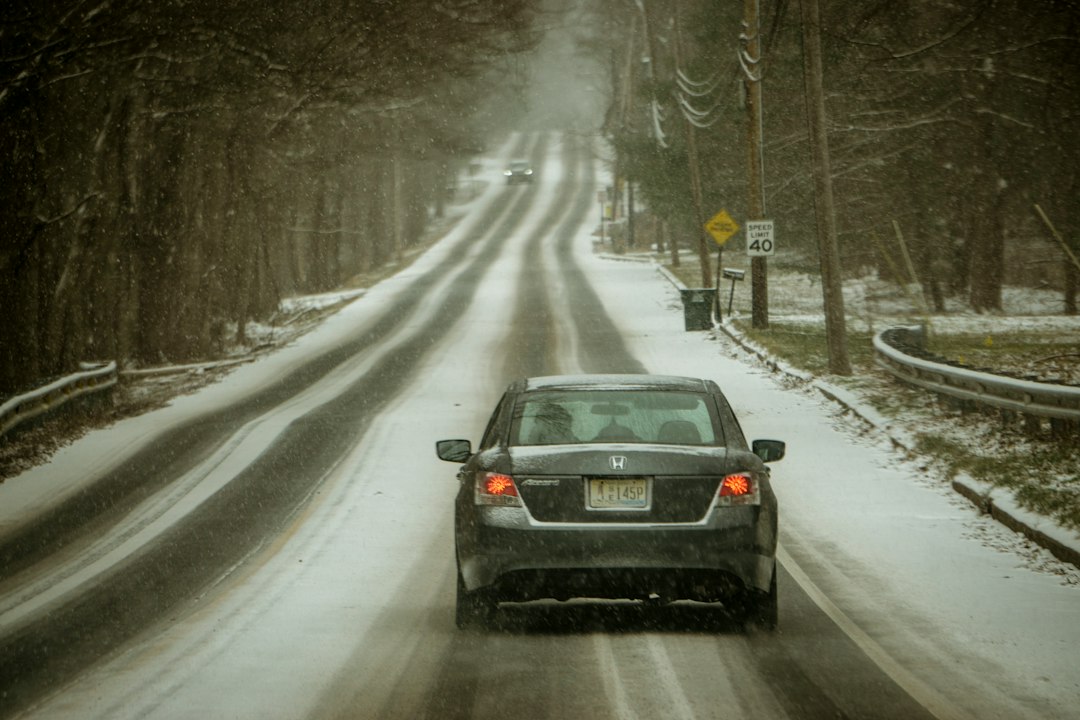
Auto insurance in Québec works differently from the rest of Canada: the public plan run by the SAAQ covers bodily injuries, while you must buy private insurance for civil liability and, if you want it, damage to your own vehicle. For Laurentides drivers, the right private coverage also depends on long commutes on the A-15, winter roads, wildlife on rural highways and a garage full of recreational vehicles. This guide explains how the system works and how to compare quotes intelligently.
Key takeaways
- Two layers: the SAAQ public plan covers bodily injuries (no-fault); private insurers cover property damage and civil liability.
- Civil liability is mandatory, with a legal minimum of $50,000. Many drivers choose much higher limits.
- Chapter B (damage to your own vehicle) is optional, but often required by your lender or leasing company.
- Winter tires are mandatory on Québec-registered passenger vehicles from December 1 to March 15.
- Your profile and use matter: commuting distance, where the car is parked, driving record and claims history all affect premiums.
- Snowmobiles, ATVs and boats need their own coverage.
Advertisement
How auto insurance works in Québec
The public plan: SAAQ
The Société de l’assurance automobile du Québec (SAAQ) administers the public automobile insurance plan. It compensates Québec residents for bodily injuries suffered in a road accident, whether they were driving, a passenger, a cyclist or a pedestrian, and regardless of who caused the accident. Because it is no-fault, you generally cannot sue another driver for bodily injuries covered by the plan. The plan is funded through contributions collected with your driver’s licence and vehicle registration, and there are no optional coverages within it.
The public plan does not pay to repair your car or for damage you cause to other people’s property. That is the role of private insurance.
Private insurance: the Québec Automobile Insurance Policy
Private insurers in Québec use a standard policy form with two main parts:
- Chapter A: civil liability (mandatory). Covers damage you cause to other people’s property, and bodily injury you cause outside Québec where the SAAQ plan does not apply. The legal minimum in Québec is $50,000. Many drivers choose $1 million or $2 million, particularly if they drive in other provinces or the United States, where injury lawsuits are possible.
- Chapter B: damage to your own vehicle (optional). Options typically include all perils, collision or upset, all perils except collision or upset (comprehensive), and specified perils.
Additional protection is available through endorsements, for example replacement cost (new vehicle value) for a set period, rental car coverage, or coverage for vehicles you rent.
Direct Compensation Agreement
For collisions in Québec involving at least two identified vehicles, the Direct Compensation Agreement means you deal with your own insurer for damage to your vehicle, whatever the share of fault. Fault is determined using standardized rules (the driver’s fault chart). If you are not at fault, you are compensated without a deductible even if you do not have collision coverage. If you are at fault, you need Chapter B collision coverage to be compensated, and your deductible applies. The agreement does not apply to single-vehicle accidents, hit-and-runs, or accidents outside Québec.
Chapter B options compared
| Option | What it generally covers | Who often considers it |
|---|---|---|
| All perils | Most causes of damage to your vehicle, including collision and non-collision events, minus listed exclusions. | New, financed or leased vehicles; drivers who want the broadest protection. |
| Collision or upset | Damage from a collision with another object or vehicle, or rollover, regardless of fault. | Drivers who want protection when at fault, for example after sliding on ice. |
| All perils except collision or upset (comprehensive) | Non-collision events such as theft, fire, vandalism, falling objects, hail and broken glass. | Owners of older vehicles who still want theft and fire protection. |
| Specified perils | Only the perils listed (for example fire, lightning, theft, windstorm, hail). | Lowest-cost Chapter B option for low-value vehicles. |
Whether a collision with an animal falls under collision or comprehensive depends on the policy wording, so ask your insurer how a moose or deer collision would be handled.
Winter tire rule and winter driving
According to the Québec government, all passenger vehicles and taxis registered in Québec, including rental vehicles, must be equipped with winter tires from December 1 to March 15. Tires must carry the winter tire pictogram (a mountain with a snowflake) or be studded tires, which are allowed during a longer season on certain vehicles. Non-compliance can bring a fine. Check the official winter tire requirements on Québec.ca for details and exemptions.
In the Laurentides, winter often arrives before December 1 and lingers after March 15, especially in the higher areas around Sainte-Agathe, Mont-Tremblant and Mont-Laurier. Installing winter tires early and removing them late is simply good practice.
Winter claims: what to know
- Sliding into a ditch or hitting a guardrail is a single-vehicle accident; damage to your car is covered only with Chapter B collision (or all perils) coverage.
- Rear-end collisions on icy roads are handled under the Direct Compensation Agreement, and fault is assigned by the standard rules, not by road conditions.
- Ice or snow falling from another vehicle and cracking your windshield is typically a comprehensive claim. Ask about glass deductibles and windshield repair options.
- Snowbank and parking-lot damage where the other party is unknown is not covered by the direct compensation agreement.
- Snow or ice sliding off a roof onto a parked car is usually a comprehensive claim under your auto policy. If it is your own roof, clearing it regularly protects both the car and the house; see our guide to roof snow load and winter insurance.
Key tip: Keep a basic winter kit in your car (scraper, shovel, blanket, booster cables, phone charger) and take photos of any accident scene, road conditions and vehicle positions before moving the cars, when it is safe to do so.
Wildlife collisions on Route 117, the A-15 and rural roads
The Laurentides is moose and white-tailed deer country. Wildlife crossings are a known hazard on rural routes, including stretches of Route 117 north of Mont-Tremblant toward Mont-Laurier, and in wooded areas along the A-15 and regional roads. Collisions are most common at dusk, at night and at dawn, and in certain seasons when animals are more active.
- Watch for wildlife crossing signs and slow down in marked areas.
- Use high beams when there is no oncoming traffic, and scan the roadsides.
- If an animal appears, brake firmly and stay in your lane where possible; swerving can lead to a more serious crash.
- After a collision, move to safety, call emergency services if anyone is injured or the animal is blocking the road, and report the accident to your insurer.
Injuries are covered by the SAAQ plan. Damage to your vehicle depends on your Chapter B coverage, so check whether your policy covers animal collisions and which deductible applies.
Advertisement
Commuting to Montreal and Laval
Many Laurentides residents commute daily on the A-15, A-13, A-640 or Route 117 to Laval and Montreal. Insurers usually ask:
- whether you use the vehicle for commuting, business or pleasure;
- your estimated annual kilometres;
- where the vehicle is parked overnight and at work.
Longer distances generally mean more exposure to accidents, which can affect your premium. Be accurate: under-declaring kilometres or use can create problems at claim time. If your situation changes (new job, remote work, retirement), tell your insurer; less driving may reduce your premium, and more driving must be declared. Some insurers also offer usage-based programs that track driving habits through an app or device; read the terms on data use before enrolling.
Rural vs. suburban factors
Premiums are based on many factors, and location is one of them. Insurers analyse claims experience by area, so living in Saint-Jérôme, Blainville or Mirabel may be priced differently than Nominingue or Val-David. Factors can include traffic density, theft rates, accident frequency and repair costs. Rural drivers face more wildlife and longer distances; suburban drivers face more traffic and parking-lot incidents. Neither is automatically cheaper, which is why comparing several insurers matters. If you are moving to the region, request auto quotes at the same time as your home quotes; our home insurance checklist for buying a property in the Laurentides covers the property side.
Other common rating factors
- driving record, including offences and demerit points;
- claims history (at-fault claims in particular);
- years of driving experience and insurance history;
- vehicle make, model, year, repair costs and theft risk;
- anti-theft systems or vehicle tracking (some insurers require them for high-theft models);
- chosen coverages, limits and deductibles;
- credit score, only with your consent.
Snowmobiles, ATVs and boats
Recreational vehicles are part of life in the Laurentides, with snowmobile trails, ATV networks and hundreds of lakes. They are generally not covered by your auto policy and need their own insurance.
- Snowmobiles and ATVs: Québec’s off-highway vehicle legislation requires owners to carry civil liability insurance, with a minimum of $1,000,000 cited for snowmobiles. You can add coverage for damage to the vehicle itself and for theft. Trail access passes are a separate requirement. SAAQ compensation for off-highway accidents is limited, generally applying only when a moving automobile is involved, so consider your personal accident and disability coverage. Confirm the current rules with the SAAQ and your insurer.
- Boats and personal watercraft: a separate boat policy or an endorsement on your home policy is usually needed. Check liability limits, coverage during transport and storage, and whether others can drive the boat. Marinas often require proof of liability insurance.
- Trailers: check whether your trailer and its contents are covered when towed and when parked.
If you own a chalet with a boat or sleds, our chalet and cottage insurance guide explains how they fit with your property coverage. If you rent the chalet and let guests use watercraft or sleds, read insuring a short-term rental chalet in Québec first: equipment lent to paying guests is often excluded.
How to compare auto insurance quotes
- Prepare your information: driver’s licence details for all drivers, driving and claims history, vehicle identification number (VIN), annual kilometres, commute distance, overnight parking location.
- Decide on liability limits. The minimum is $50,000; ask what higher limits cost.
- Choose Chapter B coverage based on your vehicle’s value and financing requirements.
- Pick deductibles you can afford, and compare quotes at two deductible levels.
- Consider endorsements: replacement cost for a newer vehicle, rental car while yours is repaired, coverage for rented vehicles.
- Get at least three quotes using identical coverage, from different channels: a broker, an agent and a direct insurer. See broker vs. agent vs. direct insurance in Québec.
- Ask about discounts: bundling with home insurance, multiple vehicles, winter tires, anti-theft devices, claims-free history, group programs.
- Read the policy and endorsements before signing.
Auto quote comparison table
| Item | Quote A | Quote B | Quote C |
|---|---|---|---|
| Annual premium (taxes included) | |||
| Chapter A civil liability limit | |||
| Chapter B option (all perils, collision, comprehensive) | |||
| Collision deductible | |||
| Comprehensive deductible | |||
| Replacement cost endorsement (duration) | |||
| Rental car while repairing | |||
| Coverage for rented vehicles | |||
| Discounts applied | |||
| Anti-theft requirements |
Bundling home and auto
Many insurers offer a discount when you insure your home and vehicles together. It can be worthwhile, but compare the bundled total with the best separate quotes. Our complete guide to shopping for home insurance in the Laurentides explains how to evaluate the home side.
Policy rules worth knowing
- Auto policies in Québec generally renew automatically; your insurer must notify you in writing before changes to premium or coverage take effect.
- You can cancel your policy with written notice; a short-rate penalty may apply if you cancel before the end of the term.
- Declare changes promptly: a new driver in the household, a change of address, a change of use or a modified vehicle.
- If several insurers refuse you, an “access to insurance” process exists to help you obtain at least the mandatory minimum coverage. Ask a broker or the insurance industry’s information services about it.
Visiting the Laurentides?
If you are driving up for a ski weekend, check that your rental car has winter tires (they are mandatory on Québec-registered rentals in season) and whether your credit card or auto policy covers rental vehicles. For places to stay, see hotels in the Laurentides.
Advertisement
Frequently asked questions
Is auto insurance mandatory in Québec?
Yes. Every vehicle owner must carry private civil liability insurance with a minimum of $50,000. Bodily injury coverage is provided through the SAAQ public plan, funded through your licence and registration payments.
Does the SAAQ pay to repair my car?
No. The SAAQ public plan covers bodily injuries. Damage to your vehicle is covered by your private insurer, either through the Direct Compensation Agreement when you are not at fault, or through Chapter B coverage.
When do I need winter tires in Québec?
From December 1 to March 15 for passenger vehicles registered in Québec, including rentals. Tires must carry the winter pictogram or be studded. In the Laurentides, installing them earlier is wise.
Am I covered if I hit a moose or deer?
Injuries are covered by the SAAQ. Damage to your vehicle is covered only if you have the appropriate Chapter B coverage; depending on the policy, animal collisions may fall under comprehensive or collision. Check your policy and deductible.
Does my auto policy cover my snowmobile or ATV?
No. Off-highway vehicles need their own policy, and Québec law requires civil liability insurance for them. Ask your insurer about damage, theft and accident coverage.
Will commuting to Montreal increase my premium?
It can. Insurers consider use and annual kilometres. Declare your commute accurately and update your insurer if your driving changes.
Want a second opinion on your coverage? Contact us and we will point you in the right direction.
This article is for general information only and is not insurance advice. Coverage, conditions and eligibility vary by insurer and policy; confirm with a licensed broker or your insurer.
Leave a Reply