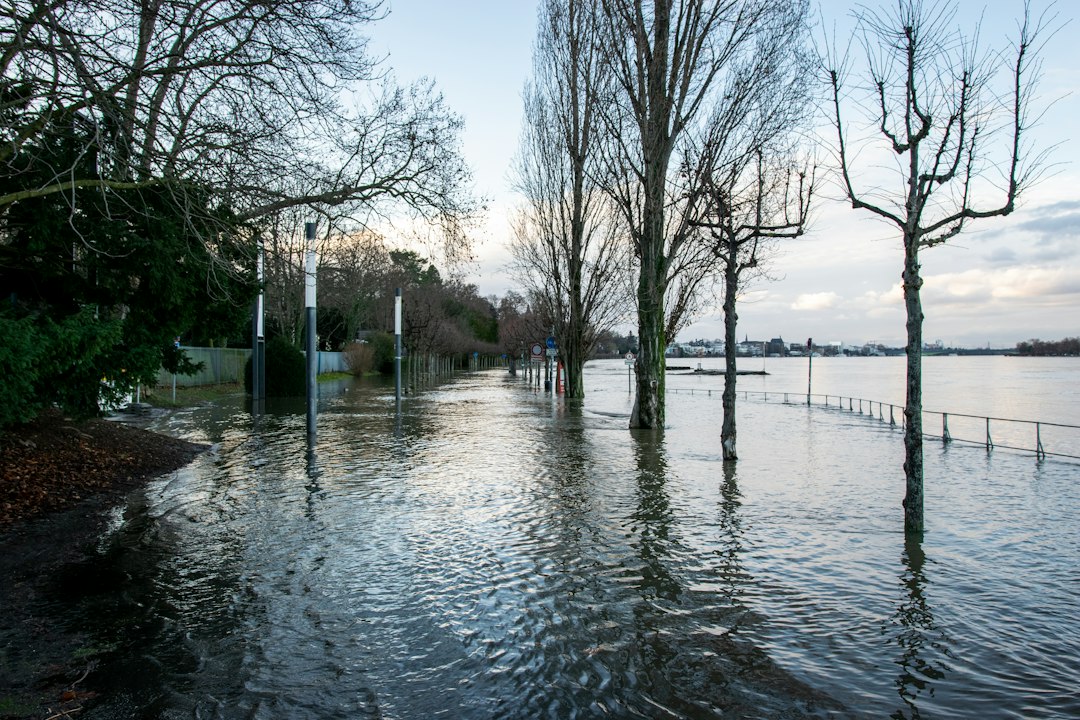
Water is one of the most common and costly causes of home insurance claims, and in the Laurentides it comes from every direction: burst pipes in January, ice dams on the roof, sewer backup during a summer downpour, and rising lakes and rivers during spring thaw. The problem is that a standard home policy only covers some of these. This guide explains exactly which water damage is usually covered, which requires an endorsement, how Québec’s flood zones affect your options, and how to protect your home and your claim.
Key takeaways
- Sudden and accidental water damage (a burst pipe, a failed water heater) is usually covered; gradual leaks and lack of maintenance usually are not.
- Sewer backup is generally an optional endorsement. Without it, water coming up through floor drains may not be covered.
- Overland water (flooding from lakes, rivers or surface runoff) is also usually optional, and may be unavailable in high-risk flood zones.
- Québec’s new flood-zone maps, rolled out to municipalities since March 2026, may affect what coverage you can get.
- Prevention devices such as leak sensors, automatic shut-off valves, backwater valves and sump pumps lower your risk and may be required or rewarded by insurers.
- Act fast after a loss: stop the water, document everything and call your insurer.
Advertisement
The four types of water damage insurers distinguish
Insurers do not treat “water damage” as one thing. The cause and the way water entered the house decide whether you are covered. Policy wording varies, but the categories below are common in Québec.
| Type | Examples | Typical treatment |
|---|---|---|
| Sudden and accidental water damage from inside | Burst pipe, broken washing machine hose, failed water heater, overflowing toilet | Often covered under standard policies, subject to exclusions and conditions (for example freezing conditions when the home is unoccupied). |
| Sewer backup | Water or sewage coming back up through floor drains, toilets or sinks from the municipal sewer or your septic system | Usually an optional endorsement, often with its own limit and deductible. |
| Overland water / flood | Lake or river overflow, spring thaw flooding, heavy rain runoff entering through doors and windows | Usually an optional endorsement; may be limited or unavailable in high-risk areas. |
| Groundwater and seepage | Water infiltrating through foundation walls or slab, rising water table | Often excluded; some insurers offer specific coverage, sometimes combined with overland water. |
Other water-related situations, like rain entering through a damaged roof, ice dams, or a leak from a neighbouring unit, each have their own treatment. Read your policy’s definitions carefully, and ask your insurer or broker to walk you through each category for your home.
Sudden vs. gradual water damage
The difference between “sudden” and “gradual” is at the heart of many disputes. A pipe that bursts and floods the basement overnight is sudden. A slow drip under the sink that rots the subfloor over months is gradual, and policies commonly exclude damage resulting from continuous or repeated leakage, wear and tear, or lack of maintenance.
- Inspect visible plumbing, the water heater, and appliance hoses regularly.
- Replace rubber washing machine hoses with braided steel ones and change them periodically.
- Replace your water heater before the end of its expected life; keep the invoice.
- Repair small leaks immediately and keep receipts showing you did.
- Re-seal around tubs and showers when caulking deteriorates.
Key tip: Keep a simple maintenance file with dates and invoices for plumbing work, water heater replacement, roof repairs and septic pumping. If a claim is questioned as “gradual damage” or “lack of maintenance,” this file is your best evidence.
Sewer backup coverage
Sewer backup happens when the municipal sewer or your private system cannot handle the flow, and water pushes back into your home through floor drains, toilets or basement fixtures. In the suburbs of the Laurentides, intense summer storms can overwhelm municipal systems. In rural areas, a saturated or failing septic system can cause backups too.
What to ask
- Is sewer backup included, or do I need to add it?
- What is the limit? Is it enough for a finished basement?
- Is there a separate deductible?
- Does coverage apply to backups from a septic system, or only from municipal sewers?
- Is a backwater valve required to get coverage, or does it earn a discount?
Many Québec municipalities require backwater valves (clapets anti-retour) in buildings connected to the municipal sewer, and failing to have one, or failing to maintain it, can affect both your claim and any claim against the municipality. Check your municipal bylaw.
Overland water and flood coverage
Overland water is water that enters your home from the surface: a lake or river overflowing its banks, spring melt combined with heavy rain, or runoff that flows into the house. Historically, this was not insurable for homes in Canada. Today, many insurers offer it as an endorsement, and the Insurance Bureau of Canada has reported that the large majority of Canadian homes can now access overland flood insurance. However, availability and price depend on the property’s risk, and coverage may be limited or not offered for homes in known high-risk flood areas.
For general guidance on flooding and insurance, visit the Insurance Bureau of Canada.
Flood zones in Québec and the 2026 maps
In June 2025, Québec adopted a modernized regulatory framework for flood zones. It classifies flood-prone areas by level of risk (from low to very high), taking into account flood frequency and water depth, and sets rules on what can be built, rebuilt or renovated in each zone. New flood maps have been gradually rolled out to municipalities and regional county municipalities (MRCs) since March 2026, with wider public release to follow. Media reports based on government estimates expect the number of homes in mapped flood zones to rise substantially.
For homeowners, the maps matter in two ways:
- Land use: in the highest-risk zones, there are restrictions on new construction and rebuilding after major damage.
- Insurance: industry commentary suggests insurers may restrict overland water, sewer backup and related coverage in higher-risk zones, or require protective measures such as backwater valves, sump pumps or raised mechanical equipment.
The Laurentides has many rivers and lakes that react to spring thaw, including the Rivière du Nord, the Rivière Rouge and the Rivière du Lièvre watersheds. If your property is near water, ask your municipality or MRC about its flood-zone status and consult the Québec government’s flood information. Then ask your insurer, in writing, what water coverage is available for your address.
Government assistance is not insurance
Québec has financial assistance programs for disasters, but they have conditions and limits and are generally aimed at losses that could not be insured. Do not count on government aid to replace insurance that was available to you.
Advertisement
Spring thaw and the Laurentides
Spring is the high-risk season. Deep snowpack melting quickly, combined with rain and frozen ground that cannot absorb water, can raise water levels and send runoff toward foundations. To prepare:
- Clear snow away from foundation walls and basement windows before the thaw.
- Make sure downspouts discharge well away from the house (at least a couple of metres) and are not blocked by ice.
- Check that the ground slopes away from the foundation.
- Test the sump pump and its battery backup or generator.
- Move valuables and documents off the basement floor.
- Follow municipal and Québec government alerts if you live near a river or lake.
Ice dams
Ice dams form when heat escaping through the roof melts snow, which then refreezes at the colder eaves. Water backs up under the shingles and leaks into ceilings and walls. Coverage for ice dam damage depends on the policy and on whether the insurer considers it sudden damage or the result of poor maintenance or insulation. Prevention is your best protection:
- improve attic insulation and ventilation to keep the roof cold;
- seal air leaks from the house into the attic;
- remove snow from the roof safely, ideally with a roof rake from the ground or by a professional;
- never chip ice with an axe or hammer, which damages shingles.
Learn more in our guide to roof snow load and winter insurance, and find local contractors at toiture.thelaurentides.com.
Wells and septic systems
Most homes and chalets outside urban centres in the Laurentides rely on private wells and septic systems. They bring specific water risks:
- Well pump and pressure tank failure: a failed pressure switch or tank can flood a basement. The water damage may be covered as sudden damage, but the pump itself may only be covered with an equipment breakdown endorsement.
- Freezing: pipes from the well and the pressure tank area must be protected from freezing.
- Septic backups: a full or failing septic tank or field can back up into the house. Ask whether your sewer backup endorsement covers septic systems.
- Maintenance: regular septic pumping is required by Québec regulations and municipal bylaws, and keeping receipts helps demonstrate proper maintenance.
Frozen pipes in houses and chalets
Freezing damage is usually covered if it is sudden and accidental, but conditions often apply when the home is unoccupied, such as keeping the heat on and having someone check the property, or shutting off and draining the water. Secondary homes are especially exposed; see chalet and cottage insurance in the Laurentides for winter conditions, and short-term rental chalet insurance if you rent your property.
Prevention devices that make a difference
| Device | What it does | Insurance angle |
|---|---|---|
| Water leak sensors | Detect water on the floor and alert you by sound or smartphone. | May qualify for a discount; useful evidence that you acted quickly. |
| Automatic water shut-off valve | Closes the main water supply when a leak is detected or abnormal flow is measured. | Increasingly recognized by insurers; particularly valuable in chalets and rentals. |
| Backwater valve | Prevents sewer water from flowing back into the house. | Often required by municipal bylaws; may be required for sewer backup coverage. |
| Sump pump with backup power | Removes water collected around the foundation, even during outages. | May be required or rewarded where groundwater or overland risk exists. |
| Temperature and power-outage alarm | Alerts you if the heat fails or power goes out. | Helps meet unoccupancy conditions and prevent freezing. |
| Raised furnace, water heater and electrical panel | Keeps critical equipment above potential flood levels. | May be requested by insurers in flood-prone areas. |
Before buying devices, ask your insurer which ones it recognizes and whether installation by a licensed professional is required. Keep invoices and photos.
How water damage claims work
- Stop the water and stay safe. Shut off the main water valve. If water is near electrical outlets or the panel, do not enter; call Hydro-Québec or an electrician if needed.
- Call your insurer as soon as possible. The Civil Code of Québec requires you to notify your insurer of a loss as soon as you become aware of it. Many insurers have 24/7 claims lines and can send emergency mitigation crews.
- Prevent further damage. Take reasonable steps: remove water, run fans and dehumidifiers, move contents. Keep receipts for emergency expenses.
- Document everything. Photograph and video the damage, the source of the water, water levels, and damaged items before removing them.
- Keep damaged items until the adjuster tells you they can be discarded, unless they pose a health hazard (photograph them first).
- Meet the adjuster and provide your maintenance records, inventory and receipts.
- Review the settlement. Ask how amounts were calculated and which coverage and deductible applied. If you disagree, ask for explanations, use the insurer’s complaint process, and know that you can contact the AMF.
For a complete walkthrough, read how to file a home insurance claim in Québec.
Choosing water coverage: a quick checklist
- Is sudden water damage covered, and with what exclusions?
- Do I have sewer backup coverage? Limit? Deductible? Septic included?
- Is overland water available for my address? Limit? Deductible?
- Is groundwater infiltration covered?
- How are ice dams treated?
- What are the unoccupancy and freezing conditions?
- Which prevention devices are required or give a discount?
- Is my well pump or sump pump covered if it breaks?
Use this checklist alongside our complete guide to shopping for home insurance in the Laurentides. If you are buying a property near water, also see our home insurance checklist for buyers.
Advertisement
Frequently asked questions
Is sewer backup covered by standard home insurance in Québec?
Usually not automatically. Sewer backup is generally an optional endorsement with its own limit and sometimes a separate deductible. Check your policy or ask your insurer.
What is the difference between sewer backup and overland water?
Sewer backup is water coming into your home through drains and sewer pipes. Overland water is water entering from the surface, such as an overflowing lake or river or runoff from heavy rain. They are separate coverages.
Can I get flood insurance if my home is in a flood zone?
It depends on the insurer and the level of risk. Coverage may be available with restrictions, higher deductibles or required protective measures, or it may not be offered in very high-risk areas. Ask several insurers or a broker.
Are leaks from an old pipe covered?
Sudden bursts are often covered, but damage from slow, continuous leaks, wear and tear, or lack of maintenance is commonly excluded. Regular maintenance and quick repairs protect both your home and your claim.
Do I have to install a backwater valve?
Many Québec municipalities require backwater valves in buildings connected to the sewer system, and some insurers require one for sewer backup coverage. Check your municipal bylaw and your policy.
How will Québec’s new flood maps affect my insurance?
If your property is newly classified in a higher-risk zone, insurers may change the water coverage they offer or require protective measures. Check your property’s status with your municipality or MRC and discuss it with your insurer at renewal.
Want a second opinion on your coverage? Contact us and we will point you in the right direction.
This article is for general information only and is not insurance advice. Coverage, conditions and eligibility vary by insurer and policy; confirm with a licensed broker or your insurer.